The Witness in the Cabinet: How Scientific Instruments Construct the Stories Science Tells
There is a persistent and seductive image of scientific observation: the lone investigator, eye pressed to lens, confronting nature directly. The instrument, in this picture, is merely a prosthesis—an extension of the unaided senses, transparent to the reality it helps reveal. The history and philosophy of science have spent the better part of half a century dismantling this image, yet it retains considerable grip, particularly in popular accounts of how discovery works. A more careful examination of how instruments are designed, deployed, and interpreted suggests something rather different: that every device brought to bear on the natural world encodes a theory of what is worth seeing, and that the stories science tells are shaped as much by these embedded choices as by the phenomena themselves.
The Telescope and the Problem of Testimony
When Galileo turned his improved telescope toward the heavens in 1609 and reported mountains on the Moon, sunspots on the solar disk, and moons orbiting Jupiter, he was not simply reporting observations. He was asking his contemporaries to accept the testimony of an instrument whose reliability for celestial purposes had not been established, interpreted by a man with a known theoretical allegiance to Copernican cosmology. The telescope's behavior in terrestrial contexts—its demonstrable magnification of distant towers and ships—was being extrapolated to a domain where the same optical principles might, for all anyone then knew, produce systematic distortions.
The philosopher Simon Schaffer and historian Steven Shapin, in their landmark study of seventeenth-century experimental culture, argued that the credibility of scientific instruments is not intrinsic to the devices themselves but is socially negotiated. The telescope became a reliable witness to celestial phenomena not because its optics were suddenly better understood, but because a community of practitioners developed shared protocols for its use, shared criteria for evaluating its outputs, and shared social arrangements—including the exclusion of those deemed unqualified to testify—that stabilized its epistemic status.
This matters because it reveals the telescope not as a neutral window but as an artifact whose narrative authority was constructed through a specific set of historical and social processes. The story it told about the heavens was inseparable from the story being told about who had the right to make claims about the heavens.
Microscopy and the Grammar of the Invisible
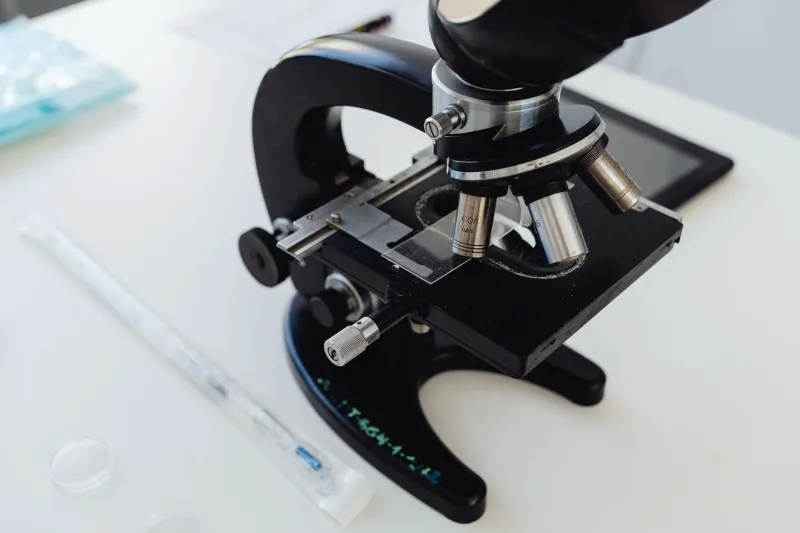
The microscope presents a different but equally instructive case. Developed in the late sixteenth and early seventeenth centuries and refined through the work of figures such as Antonie van Leeuwenhoek and Robert Hooke, the instrument opened a domain of phenomena that had no prior conceptual vocabulary. Hooke's Micrographia of 1665 is often celebrated for its meticulous engravings of fleas, cork cells, and needle points—but it is worth pausing over what those images actually represent.
Hooke was not simply recording what he saw. He was making decisions about how to render three-dimensional, often moving, sometimes translucent objects as static, bounded, two-dimensional figures on a printed page. The conventions he developed for this translation—decisions about lighting, orientation, the level of detail to include, the features to emphasize—were not dictated by the phenomena. They were imposed upon the phenomena by a trained artistic and scientific sensibility operating within the visual culture of Restoration England.
The implication is significant: the microscope did not simply reveal the microworld; it participated in constructing a particular representation of the microworld that subsequent investigators took as their baseline. When later microscopists reported seeing things that Leeuwenhoek had not described, or failed to see things he had, the disputes that followed were not merely about visual acuity. They were about the reliability of particular instruments, the competence of particular observers, and the validity of particular representational conventions—all of which were simultaneously technical and social questions.
The Spectroscope and the Standardization of Evidence
If the telescope and microscope illustrate how instruments shape what can be seen, the spectroscope offers a case study in how instruments shape what counts as proof. Developed in its modern analytical form by Gustav Kirchhoff and Robert Bunsen in the 1850s, the spectroscope allowed investigators to identify chemical elements by the characteristic lines they produce when heated gases emit or absorb light. It rapidly became one of the most powerful tools in nineteenth-century physics and astronomy, enabling the identification of elements in stellar atmospheres from observatories thousands of miles from the stars themselves.
The device's authority rested on a specific claim: that the spectral lines produced by a given element are invariant—identical wherever and whenever the element is observed. This was not a finding that preceded the instrument; it was a theoretical commitment built into the instrument's design and the protocols for its use. The spectroscope was calibrated against known substances in laboratory conditions and then deployed to make inferences about conditions that could never be directly reproduced in a laboratory. The inference chain was long, and each link depended on assumptions about the uniformity of physical law across cosmic scales.
When helium was identified in the solar spectrum in 1868—decades before it was isolated on Earth—the spectroscope's narrative authority was sufficiently established that the identification was accepted, at least provisionally, despite the impossibility of direct verification. The instrument had become, in the language of the philosopher Ian Hacking, not merely a tool for intervening in nature but a framework for representing it—a framework that carried its own standards of evidence and its own criteria for what a discovery looks like.
Design as Argument, Calibration as Rhetoric
These three cases converge on a common point: instrument design is a form of argument. When an engineer or scientist builds a measuring device, they are making decisions about sensitivity and range, about what signals to amplify and what to filter out as noise, about what units to use and what baseline to calibrate against. Each of these decisions encodes an assumption about the phenomenon being studied—what it is, how it behaves, and what features of it are scientifically significant.
This is not a defect. It would be impossible to build a useful instrument without making such assumptions; a device sensitive to everything would be useful for nothing. But recognizing the argumentative structure of instrument design has important consequences for how we understand scientific objectivity. The philosopher Heather Douglas has argued that values inevitably enter scientific reasoning at multiple points, including the interpretation of evidence—and instrument design is one of the earliest and most consequential of those entry points.
In contemporary research contexts—where instruments range from gene sequencers and fMRI machines to the algorithmic systems that analyze their outputs—this recognition carries practical urgency. The design choices embedded in a functional MRI protocol, for example, determine which patterns of neural activity are treated as signal and which as artifact, shaping the conclusions that neuroimaging studies can reach before a single subject enters the scanner. Understanding these choices as argumentative rather than merely technical is a precondition for subjecting them to appropriate critical scrutiny.
Conclusion: Toward an Epistemology of the Device
The myth of neutral observation has proven remarkably durable, in part because the instruments that mediate scientific observation are so easy to treat as transparent. They sit in laboratories and observatories, doing their work quietly, accumulating data that appears to speak for itself. But data does not speak for itself; it is spoken for, by the devices that collect it, the protocols that govern their use, and the interpretive frameworks that determine what the numbers mean.
Recovering the argumentative content of instrument design—attending to the stories that devices tell, and asking on whose behalf they tell them—is not an exercise in skepticism about science. It is an exercise in the kind of reflective rigor that the history and philosophy of science exist to promote. The instruments in the cabinet are narrators. Learning to read their testimony critically is among the most important intellectual tasks that scientific culture faces.