Procedures as Pedagogy: The Epistemological Authority of the Laboratory Manual in American Scientific Training
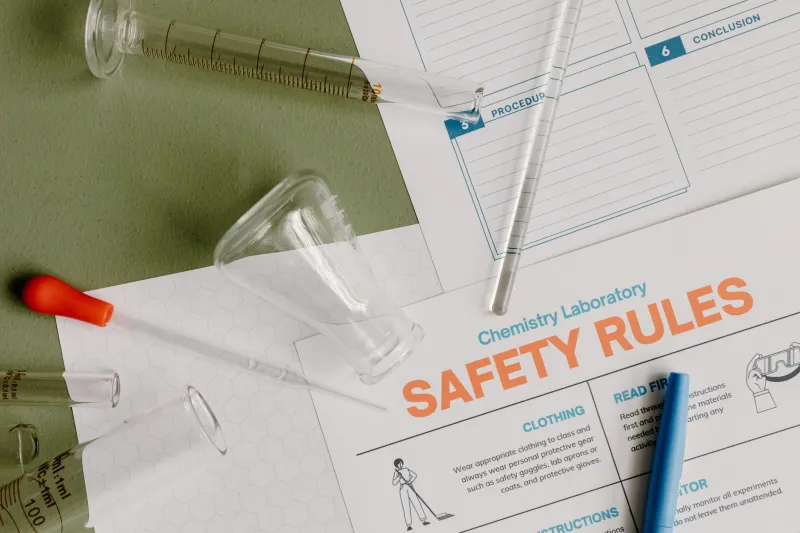
When historians reconstruct the development of a scientific discipline, they tend to reach for the canonical texts: the landmark papers, the theoretical treatises, the correspondence between luminaries. What they rarely reach for is the laboratory manual—that modest, spiral-bound, frequently coffee-stained document that has governed the actual formation of working scientists for well over a century. This omission is not trivial. It reflects a persistent bias in the history and philosophy of science toward propositional knowledge at the expense of procedural knowledge, toward what scientists claim over what scientists do.
The laboratory manual, in its various institutional incarnations, is arguably one of the most consequential pedagogical instruments in the history of American science. Yet it remains almost entirely absent from standard accounts of how scientific knowledge is produced, transmitted, and legitimated.
The Manual as Epistemological Artifact
To understand the laboratory manual as something more than a technical convenience, one must first recognize what it actually encodes. A well-constructed manual does not merely describe a procedure; it prescribes an entire sensory and cognitive orientation to the natural world. It tells the student not only what to do but how to perceive, what to expect, what to record, and—crucially—what to regard as error. In this sense, the manual is a normative document as much as a descriptive one.
Philosophers of science, following Michael Polanyi's influential account of tacit knowledge, have long acknowledged that a significant portion of scientific competence cannot be fully articulated in explicit instructions. The skilled microscopist, the experienced titrator, the practiced crystallographer—each possesses a repertoire of embodied judgments that resist complete verbalization. Laboratory manuals occupy a fascinating and somewhat paradoxical position in this landscape: they represent the attempt to codify what is, by its nature, resistant to codification. The gap between what the manual prescribes and what the experienced practitioner actually does is not merely a pedagogical inconvenience; it is an epistemological chasm.
Institutionalization and the American Research University
The emergence of the laboratory manual as a formal instructional genre in the United States is closely tied to the transformation of higher education in the latter half of the nineteenth century. The founding of Johns Hopkins University in 1876 and the subsequent proliferation of the German-inflected research university model placed laboratory work at the center of scientific training in ways that had no real precedent in earlier American collegiate culture. Chemistry, physics, and biology departments began producing standardized instructional sequences, and with them, the first generation of purpose-built laboratory manuals.
What is striking about this period is the degree to which the content and structure of these manuals reflected institutional priorities that were not purely epistemic. The choice of which procedures to include—and which to omit—was shaped by considerations of cost, safety, available equipment, and, not least, the professional interests of faculty who had invested their careers in particular methodological traditions. A manual that emphasized quantitative gravimetric analysis over qualitative organic methods, for instance, was not simply making a neutral pedagogical choice; it was encoding a hierarchy of scientific value.
The historian of science Kathryn Olesko's work on precision measurement in nineteenth-century German physics education offers a useful parallel here. Olesko demonstrated that the training students received in the physics seminar was not incidental to the production of knowledge—it was constitutive of it. The habits of mind instilled through repeated experimental practice became the epistemic infrastructure upon which entire research programs depended. American institutions absorbed and adapted this model, but the underlying dynamic remained: procedural training was not preparation for science; it was science.
What the Manual Cannot Say
The tension between codified instruction and embodied skill becomes most visible at moments of failure. When a student cannot reproduce a result that the manual presents as straightforward, the question of where the breakdown occurred is rarely simple. Is it the student's technique? The quality of the reagents? The calibration of the instrument? The adequacy of the manual's own description? In practice, these questions are resolved through a kind of informal apprenticeship—the graduate teaching assistant who demonstrates the correct wrist movement, the senior colleague who knows that the centrifuge in Lab 4 runs slightly fast—that operates entirely outside the written record.
This informal layer of transmission is not a supplement to the official curriculum; in many respects, it is the curriculum. The knowledge that actually enables reproducibility—the kind of reproducibility that makes science science—is transmitted through personal contact, demonstration, and accumulated institutional memory. When a laboratory closes, when a research group disperses, when a senior technician retires without training a successor, that knowledge does not migrate into any archive. It simply disappears.
The implications for the philosophy of science are considerable. If reproducibility is the hallmark of scientific legitimacy, and if reproducibility depends on forms of knowledge that resist explicit articulation and formal preservation, then the epistemological foundations of science rest on a substrate that is simultaneously indispensable and invisible.
Professionalization, Commodification, and the Erasure of Craft
The twentieth century brought increasing pressure to standardize laboratory training in ways that would make it scalable, assessable, and portable across institutional contexts. The development of commercial laboratory kits, pre-prepared reagents, and modular instructional programs responded to genuine logistical needs but also accelerated the displacement of craft knowledge from the center of scientific training. When a student follows a protocol using pre-calibrated equipment and pre-measured reagents, they are performing a simulation of experimental science rather than engaging with its underlying material contingencies.
This is not merely a nostalgic complaint about the deskilling of laboratory workers. It has direct consequences for the integrity of scientific knowledge. Scientists trained primarily on optimized, failure-resistant protocols may lack the troubleshooting capacities and material intuitions necessary to recognize when something genuinely unexpected is occurring—when an anomaly is not a failure of technique but a discovery.
The growing literature on the replication crisis in contemporary science has tended to focus on statistical methodology and publication incentives. Less attention has been paid to the possibility that failures of replication may also reflect the erosion of the tacit, procedural knowledge that once circulated through laboratory communities and made reproducibility possible in the first place.
Recovering the Procedural Record
For historians and philosophers of science, the laboratory manual represents an underexplored archive of considerable richness. A systematic comparative study of manuals across disciplines, institutions, and historical periods would illuminate not only how scientific training evolved but how particular methodological assumptions became naturalized as common sense. Which procedures were deemed essential? Which were considered too dangerous, too expensive, or too theoretically contentious for inclusion? Whose expertise was drawn upon in constructing these documents, and whose was silently excluded?
These are not merely antiquarian questions. They bear directly on how we understand the social and epistemological organization of contemporary science—on who gets to define competence, who gets to certify knowledge, and who bears the costs when the invisible curriculum fails to transmit what it was never formally required to preserve.
The laboratory manual, in the end, is a document about power as much as it is about procedure. Attending to it seriously is one way of recovering the full complexity of how science is actually made.