Hands Erased from the Record: Artisans, Instrument-Makers, and the Epistemological Exclusions of Early Modern Science
The Workshop Behind the Observatory
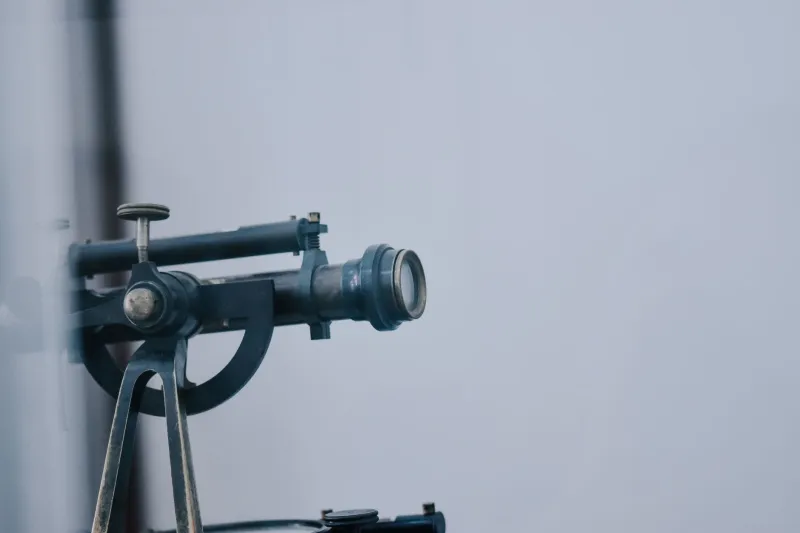
When Galileo turned a refracting telescope toward the moons of Jupiter in the winter of 1609 and 1610, he was using an instrument he had improved but not invented—one whose optical principles depended on techniques of lens-grinding developed by craftspeople in the Netherlands whose names history has largely failed to preserve. The observations Galileo recorded, and the theoretical conclusions he drew from them, became cornerstones of the Copernican revolution. The artisans whose hands shaped the glass through which those observations were made received no comparable recognition, either in Galileo's own writings or in the historiography that subsequently celebrated his achievement.
This asymmetry was not accidental. It was the product of a deliberate epistemological hierarchy constructed during the sixteenth and seventeenth centuries—one that sorted knowledge into categories of greater and lesser dignity, and placed theoretical reasoning firmly above practical skill. Understanding how that hierarchy was built, and why it proved so durable, is essential for any serious account of how modern science came to understand itself, and how contemporary innovation cultures continue to distribute credit and authority.
The Philosophical Architecture of Exclusion
The conceptual scaffolding that elevated theory over practice drew on ancient sources. Aristotle's distinction between episteme—systematic, demonstrative knowledge of causes—and techne—the practical knowledge of how to make things—provided early modern natural philosophers with a ready-made vocabulary for ranking cognitive activities. Theoretical knowledge, in this tradition, engaged universal truths and was therefore genuinely scientific. Practical knowledge, however refined and however essential, remained contingent, particular, and philosophically subordinate.
Francis Bacon challenged this hierarchy in important respects, famously arguing in the Novum Organum that natural philosophy must engage with the material world rather than merely contemplating it from a distance. Yet even Bacon's reformulation preserved a crucial distinction: the natural philosopher directed inquiry and interpreted results, while the craftsperson supplied raw technique and raw material. The experimenter and the artisan might inhabit the same physical space—as they did in Boyle's laboratory, in which hired technicians operated air pumps and prepared apparatus—but they occupied entirely different positions in the emerging social geography of knowledge.
Steven Shapin and Simon Schaffer's landmark 1985 study, Leviathan and the Air-Pump, documented with precision how Robert Boyle's experimental program depended on the technical labor of unnamed assistants, and how the conventions of scientific writing at the time systematically rendered that labor invisible. The passive voice construction favored in early Royal Society publications—"the experiment was performed," "the apparatus was arranged"—was not merely stylistic. It was an active mechanism of erasure, dissolving the human hands behind the procedure into the impersonal authority of nature itself.
Instrument-Makers and the Unacknowledged Infrastructure of Discovery
The case of instrument-makers is particularly instructive because their contributions were not merely manual but genuinely intellectual. Producing a reliable barometer, a precision thermometer, or an achromatic telescope lens required not only physical dexterity but systematic empirical reasoning about materials, tolerances, and optical properties. Instrument-makers such as Jesse Ramsden and Edward Troughton in eighteenth-century Britain developed calibration techniques and mechanical innovations that directly enabled the precision measurements on which Newtonian astronomy depended. Their workshops were, in a meaningful sense, research environments.
Yet the institutional and rhetorical structures of natural philosophy consistently positioned them as suppliers rather than contributors. Fellowship in the Royal Society was extended to gentlemen and university-trained scholars; skilled craftspeople occupied a different social register, one that the period's prevailing assumptions about the relationship between manual labor and intellectual capacity placed firmly outside the boundaries of genuine philosophical inquiry. When instrument-makers did receive acknowledgment, it was typically framed as praise for their execution of a scientist's design—their work understood as faithful reproduction rather than original thought.
This framing required active maintenance. Historians of science, including Pamela O. Long and Pamela H. Smith, have demonstrated that early modern artisans possessed sophisticated empirical traditions—what Smith calls "artisanal epistemology"—that were neither derivative of nor inferior to university natural philosophy. Alchemical workshops, pottery studios, and metallurgical operations generated genuine experimental knowledge about material transformation, long before the Royal Society existed to codify what counted as a legitimate scientific result. The elevation of theoretical natural philosophy to epistemic supremacy was a political and institutional achievement as much as a purely intellectual one.
Persistence and Contemporary Resonance
The hierarchy constructed during the scientific revolution did not dissolve with the Enlightenment or with the professionalization of science in the nineteenth century. It adapted. In American research universities today, the distinction between principal investigators and laboratory technicians, between theorists and engineers, between academic researchers and the skilled tradespeople who build the instruments those researchers use, reproduces the fundamental structure of the early modern division between philosopher and artisan.
Patent law provides a particularly clear contemporary example. The United States patent system formally recognizes only named inventors—typically the researchers or engineers who conceived an idea at the level of abstract design—while the machinists, programmers, and fabricators who translated that design into working reality receive no legal recognition of their intellectual contribution. This is not a neutral technical arrangement; it reflects a deeply embedded assumption about which cognitive activities constitute genuine invention and which constitute mere execution.
Similar dynamics appear in the technology sector, where the labor of data annotators, content moderators, and quality-assurance workers—whose judgments directly shape the behavior of AI systems—is structurally invisible in the narratives that celebrate those systems' achievements. The epistemological hierarchy that erased the glass-grinder from Galileo's story has found new domains in which to operate.
Recovering What Was Lost
Recovering the contributions of early modern artisans and instrument-makers is not a merely antiquarian project. It is an exercise in understanding how knowledge communities define their own boundaries—what they count as knowledge, who they count as knowers, and whose labor they render legible or invisible in the process. The history of science that takes these questions seriously is not a sentimental corrective to triumphalist narratives; it is a more accurate account of how scientific knowledge has actually been produced.
For American audiences grappling with contemporary debates about innovation credit, workforce recognition, and the social distribution of technological rewards, the early modern workshop offers a surprisingly relevant case study. The hands that shaped the lenses, calibrated the instruments, and maintained the apparatus were not peripheral to the scientific revolution. They were constitutive of it. That this remains a minority view in popular accounts of scientific history is itself a fact that demands explanation—and that the history and philosophy of science is uniquely equipped to provide.